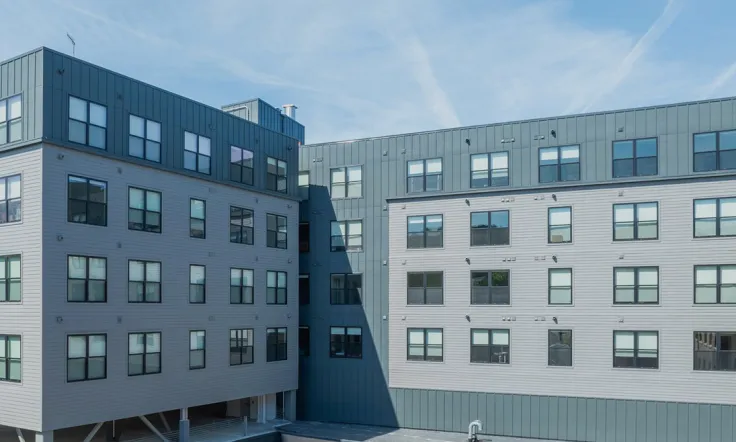
Material Matters: Why Polymer Windows Belong in High-Performance Projects
When architects and developers specify windows for high-performance buildings, glazing often receives most of the attention. Triple-pane glass, low-emissivity coatings, and solar heat gain coefficients are central to energy-efficient design. But one component can have just as much influence on overall window performance: the frame.
Frame material affects thermal efficiency, structural capabilities, durability, maintenance requirements, and long-term building performance. Yet material selection is often driven by familiarity or initial cost rather than a complete evaluation of these factors.
As Passive House, net-zero, and energy-efficient construction become more common across commercial and multifamily projects, polymer windows are emerging as an important alternative to conventional framing systems.
Understanding where polymer performs well—and how it compares with other materials—can help project teams make more informed fenestration decisions.
Why Frame Material Matters in High-Performance Buildings
Windows are among the most thermally demanding components of the building envelope. While glazing performance is essential, the frame also contributes to heat transfer through the complete window assembly.
Highly conductive framing materials can create thermal bridges, allowing heat to move between indoor and outdoor environments. This can increase heating and cooling demand, reduce interior surface temperatures, and contribute to condensation risk.
According to the U.S. Department of Energy, window energy performance depends on multiple factors, including glazing configuration, frame materials, U-factor, and solar heat gain coefficient.
For architects and building performance consultants, this means evaluating whole-window performance rather than focusing exclusively on the glass.
Frame selection should support the project's broader objectives:
Reduced heat transfer and thermal bridging
Improved airtightness and condensation resistance
Structural performance appropriate for building height and exposure
Long-term durability and maintenance efficiency
Compatibility with architectural and façade requirements
The right material helps ensure that the complete fenestration assembly performs as intended.
What Makes Polymer Windows Different?
Polymer windows typically use engineered unplasticized polyvinyl chloride (uPVC) profiles designed to provide thermal insulation, durability, and resistance to environmental exposure.
Unlike aluminum, which conducts heat readily, polymer has inherently low thermal conductivity. This makes it particularly useful in buildings where minimizing heat transfer is a primary design objective.
Modern polymer window systems can also incorporate internal reinforcement, multi-chamber profiles, advanced gasket configurations, and high-performance glazing packages.
These technologies allow polymer systems to support demanding commercial applications rather than being limited to conventional residential construction.
Thermal Efficiency Without Relying on Highly Conductive Frames
One of polymer's primary advantages is its resistance to heat transfer.
Because the frame material is naturally insulating, polymer systems can help reduce conductive heat loss and improve the thermal performance of the complete window assembly.
When combined with triple glazing, low-E coatings, and warm-edge spacers, thermally efficient polymer frames can contribute to:
Lower whole-window U-factors
Reduced heating and cooling demand
Warmer interior surface temperatures during winter
Improved condensation resistance
Greater occupant comfort
For Passive House and low-energy buildings, these benefits can help project teams achieve demanding envelope performance targets.
Engineered for Commercial Structural Requirements
A common misconception is that polymer windows are suitable only for small residential openings.
In reality, modern reinforced polymer systems can be engineered for larger openings and more demanding commercial applications.
Structural reinforcement and carefully designed frame profiles allow certain polymer systems to meet commercial window (CW) and architectural window (AW) performance classifications.
For example, INTUS's Supera AW polymer window systems are designed for mid- to high-rise applications, combining structural performance with thermally efficient framing technology.
However, structural capabilities vary by product, configuration, opening size, and project requirements. Architects should always review tested performance data and project-specific engineering requirements before selecting a system.
Polymer vs. Aluminum: Understanding the Performance Tradeoffs
Aluminum has long been a common choice for commercial fenestration because of its strength, durability, and architectural flexibility.
However, aluminum is also highly conductive, meaning thermal performance depends heavily on the effectiveness of the frame's thermal breaks.
Polymer approaches this challenge differently.
Because polymer naturally resists heat transfer, it can provide strong insulating performance without relying on the same type of thermal separation required by conventional aluminum profiles.
The two materials offer different advantages:
Polymer window systems
Inherently low thermal conductivity
Strong insulating potential
Low maintenance requirements
Reinforced options for commercial applications
Compatibility with high-performance glazing
Thermally broken aluminum systems
High structural strength
Flexibility for complex architectural applications
Established use in commercial façades
Improved thermal performance through engineered thermal breaks
Broad configuration and finish options
Neither material is automatically the right solution for every building.
The appropriate choice depends on structural requirements, architectural intent, climate, thermal targets, maintenance expectations, and project budget.
For teams evaluating material alternatives, INTUS's article on how window frame materials influence building performance provides additional context.
Where Polymer Windows Deliver the Greatest Value
The advantages of polymer become particularly relevant in projects where building envelope performance has a significant influence on operational efficiency and occupant comfort.
Passive House and Low-Energy Buildings
Passive House construction prioritizes reduced heating and cooling demand through highly insulated, airtight building envelopes.
Fenestration systems must support these objectives while managing solar gain, structural requirements, and occupant comfort.
Polymer frames can contribute to this strategy by limiting conductive heat transfer and supporting strong whole-window thermal performance.
INTUS's Supera 83 Passive+ is one example of a polymer window system designed for demanding Passive House applications.
Multifamily and Affordable Housing
Multifamily developments require window systems that balance energy efficiency, durability, occupant comfort, and cost.
For affordable housing projects, these considerations become especially important because buildings must meet performance expectations while operating within constrained construction budgets.
Polymer windows can offer a practical combination of thermal performance, low maintenance, and commercial-grade capabilities.
Their insulating characteristics can also help improve comfort near glazed areas, reducing cold spots and supporting more consistent indoor temperatures.
Commercial and Institutional Projects
Schools, offices, hospitality developments, and institutional buildings increasingly require fenestration systems that support multiple performance objectives.
In addition to thermal efficiency, project teams must consider acoustics, airtightness, durability, and architectural flexibility.
Engineered polymer systems can support these requirements across a range of building types.
For example, INTUS's Supera CW window systems are designed for low- to mid-rise commercial applications, including multifamily, hospitality, institutional, and retrofit projects.
Durability and Lifecycle Performance Matter Too
High-performance building design is not only about reducing energy consumption during the first years of operation.
Windows must maintain their functionality and performance throughout the building's lifecycle.
Polymer frames offer several characteristics that support long-term durability, including resistance to moisture, corrosion, and the maintenance demands associated with certain other framing materials.
Unlike wood, polymer generally does not require periodic painting or refinishing to protect the underlying frame material.
However, long-term performance still depends on product quality, reinforcement, environmental exposure, hardware maintenance, and proper installation.
For developers, these considerations influence the total cost of ownership.
For architects, they reinforce the importance of evaluating fenestration materials based on lifecycle performance rather than initial specifications alone.
What Architects Should Evaluate Before Specifying Polymer Windows
Polymer offers important advantages, but material selection should always be based on the complete project's requirements.
Before specifying polymer fenestration, architects and building performance consultants should consider:
Whole-window U-factor: Does the complete assembly meet the project's thermal performance targets?
Structural requirements: Can the proposed configuration accommodate site-specific wind loads and opening dimensions?
Glazing performance: Is the glazing package appropriate for the climate, orientation, and energy model?
Airtightness: Does the system provide tested air leakage performance suitable for the building?
Acoustic performance: Does the assembly meet the project's sound transmission requirements?
Installation detailing: Can the window integrate effectively with the surrounding air, water, and thermal barriers?
Lifecycle considerations: How do maintenance, durability, and replacement expectations compare with alternative systems?
Evaluating these factors early helps avoid specification changes and supports better coordination between architects, contractors, and fenestration manufacturers.
The INTUS Approach to High-Performance Polymer Fenestration
At INTUS Windows, polymer is more than a material choice. It is part of a broader approach to engineering high-performance fenestration for modern commercial buildings.
Our Supera polymer window systems combine thermally efficient frame technologies with advanced glazing, structural reinforcement, and performance-focused engineering.
The product range includes solutions designed for different building heights, structural requirements, and energy-performance targets.
Beyond the product itself, INTUS supports project teams through technical collaboration, specification assistance, and technology-driven processes that help improve accuracy and coordination throughout project delivery.
For architects and developers, this means evaluating polymer fenestration as part of the complete building envelope strategy—not simply as an alternative frame material.
Better Material Decisions Lead to Better Building Performance
High-performance buildings depend on the interaction of multiple systems, and window frames are an important part of that equation.
Polymer windows offer a compelling combination of thermal efficiency, durability, and engineered structural capabilities that makes them worth considering for modern commercial and multifamily construction.
The key is understanding where the material's advantages align with the project's performance requirements.
For architects, developers, and building performance consultants, selecting the right fenestration material early can help improve energy efficiency, occupant comfort, project coordination, and long-term building value.
Exploring Polymer Windows for Your Next Project?
INTUS works with project teams to evaluate high-performance polymer fenestration solutions that support demanding building envelope requirements.