Blog
How Passive House is Revolutionizing the Window Industry
In the world of sustainable building, few movements have made as significant an impact as Passive House. Born in Germany and now gaining momentum across North America, this standard sets the bar for energy efficiency, indoor comfort, and building resilience. And at the heart of this quiet revolution? Windows.
At INTUS Windows, we’ve seen firsthand how Passive House is redefining what architects, developers, and homeowners expect from their windows. It’s not just about views and ventilation anymore – it’s about performance, sustainability, and long-term value.
What is Passive House?
Passive House (or Passivhaus) is a rigorous, voluntary building standard focused on reducing a building’s ecological footprint. The goal is to create structures that require minimal energy for heating or cooling while maintaining a consistently comfortable indoor climate year-round.
The five core principles include:
Super-insulated envelopes
Airtight construction
High-performance windows and doors
Thermal bridge-free design
Balanced ventilation with heat recovery
Windows play a crucial role in meeting these goals – and that’s where the industry is seeing major shifts.
Why Passive House Windows Are Different
Passive House-certified windows are engineered to outperform traditional models in nearly every metric:
Superior insulation: Typically triple-glazed with warm-edge spacers and insulated frames to reduce heat transfer.
Airtight sealing: Advanced gaskets and installation methods help eliminate drafts and air leakage.
Optimized solar gain: Proper orientation and glazing options maximize beneficial solar heat during winter while minimizing overheating in summer.
Condensation resistance: By maintaining higher surface temperatures, Passive House windows reduce the risk of condensation – protecting both comfort and building materials.
These aren’t just energy upgrades – they’re performance game changers.
The INTUS Advantage in Passive House Design
INTUS Windows was one of the early adopters of Passive House principles in the U.S. market. Our Supera 83 Passive polymer windows are designed specifically to meet and exceed the rigorous demands of PHI (Passive House Institute) standards.
From our triple-glazed, thermally broken frames to our continuous product innovation, we’ve aligned our design philosophy with Passive House priorities:
Exceptional thermal performance
Robust air and water tightness, tested to meet and surpass industry benchmarks
A wide array of aesthetic and customization options to support both modern and traditional architecture
We also work closely with architects and energy consultants during the design phase to ensure our products support your project's performance goals – whether it's a Passive House-certified build or simply targeting high energy efficiency.
Changing the Window Conversation
Passive House is transforming the window industry by raising expectations. Performance is no longer a luxury – it’s a necessity. As building codes tighten and demand for sustainability grows, Passive House windows are setting the new standard.
For developers, builders, and architects, this shift is an opportunity to stay ahead of the curve – to design smarter, build better, and invest in long-term solutions. At INTUS Windows, we’re proud to be part of that transformation.
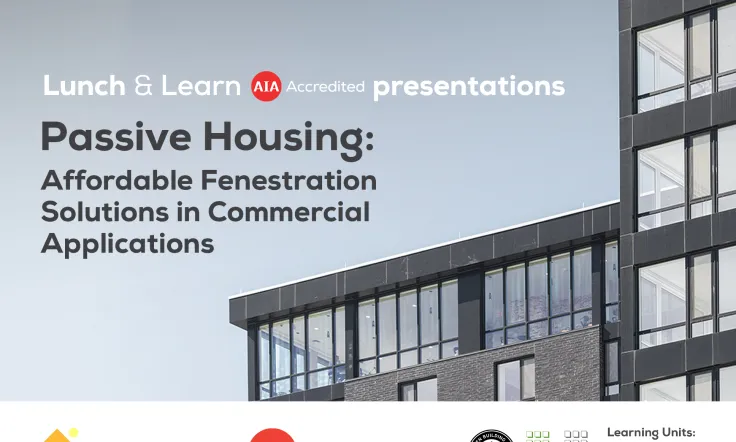
Want to talk more about INTUS Windows products for Passive Houses? Contact us or schedule a free Lunch & Learn presentation for your company!