Blog
How the Right Retrofit Windows Can Achieve Near New-Build Performance
For developers and builders managing renovation projects, existing assets, or value-add strategies, the window decision is rarely a blank slate. You're not choosing between options in a vacuum—you're working with existing structures, occupied buildings, constrained timelines, and boards focused on capital efficiency.
Choosing between retrofit windows vs. new build misses the point. The real question is: how do you achieve the performance outcomes you need within the realities of your project?
The answer, increasingly, is that the right retrofit window system can deliver near new-build performance—better airtightness, stronger thermal efficiency, and a meaningfully upgraded building envelope without the cost, timeline, or disruption of full structural replacement.
The Retrofit Performance Gap Is Closing
There's a persistent assumption that retrofit windows are a performance compromise—a practical choice, not an optimal one. That assumption is increasingly outdated.
Modern high-performance retrofit window systems are engineered specifically to close the gap with full-frame new construction. The distinction is no longer about whether retrofit can perform; it's about whether the right system is specified and installed correctly.
Three advances have changed the calculus:
Precision-engineered frame systems designed for retrofit installation can now achieve thermal performance levels—measured by U-value and whole-window performance—comparable to new construction equivalents.
Advanced airtightness detailing, including purpose-built sealing membranes and perimeter treatments, allows properly installed retrofit systems to approach the continuous air barrier performance of full-frame installations.
Technology-driven workflows—including digital measurement, AI-enabled fabrication, and coordinated submittals—reduce the variability that have historically limited retrofit performance outcomes.
The result: for a significant number of commercial renovation projects, high-performance retrofit windows are no longer a compromise. They are the right solution.
Understanding the Installation Difference — and Why It Matters Less Than You Think
Retrofit windows are installed into existing openings — in some cases directly over an existing frame, in others into a cleaned opening within the original wall assembly. The key distinction from new construction is that the surrounding structure remains intact.
New build windows are installed into the rough opening of a wall — either in new construction or following complete structural strip-back — allowing full integration with the building envelope from the ground up.
Conventionally, this difference has been framed as a performance hierarchy: new build wins, retrofit compromises. In practice, it's more nuanced.
The performance of any window installation — retrofit or new construction — is determined by three factors:
The quality of the window system itself (glazing, frame, thermal break engineering)
The quality of the installation and surrounding detailing (air sealing, insulation continuity, moisture management)
The condition and suitability of the surrounding structure
Where the existing structure is sound, high-performance retrofit installation — executed with precision engineering and the right system — can control all three variables effectively. The performance gap is not structural. It is a specification and execution gap.
The Business Case for High-Performance Retrofit
For developers and asset managers, the decision framework isn't primarily technical — it's financial and operational. Here's where high-performance retrofit windows make a compelling case.
Lower Capital Outlay, Comparable Performance
Full-frame new construction requires significant additional scope: structural opening work, full weather barrier integration, extended installation timelines, and interior/exterior finish disruption. For occupied or partially occupied assets, this also means managing tenant impact and operational downtime.
High-performance retrofit installation eliminates most of this scope while still delivering measurable energy efficiency gains, improved occupant comfort, and a meaningfully upgraded building envelope. For value-add strategies where capital efficiency matters, this is a material advantage.
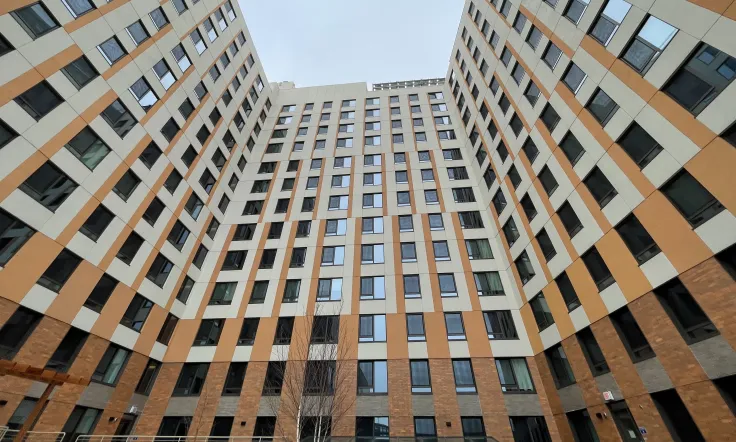
Bay State Place Renovation: A comprehensive retrofit utilizing INTUS CW windows helped preserve vital affordable housing stock while increasing resident comfort and long-term building performance.
Faster Delivery, Less Project Friction
Timeline compression is a consistent advantage of well-executed retrofit projects. With technology-driven measurement and fabrication processes, retrofit window programs can move from survey to installation significantly faster than full structural replacement approaches.
INTUS technology-enabled workflows — including digital measurement tools and AI-assisted fabrication — further reduce variability and rework risk, supporting predictable project delivery. For occupied assets or projects with staged completion requirements, this is operationally significant.
Long-Term Asset Performance
A common concern with retrofit approaches is longevity — the worry that a retrofit solution is a temporary fix rather than a durable upgrade. With precision-engineered systems, this concern doesn't hold. High-performance retrofit window systems are designed for long-term durability, with frame engineering, glazing specifications, and installation detailing that support sustained performance over the asset lifecycle.
For developers thinking in terms of long-term asset performance and reduced maintenance exposure, this matters more than the initial installation method.
The Poplar: INTUS Supera CW windows played a critical role in transforming The Poplar into a fully carbon emission-free property.
Retrofit vs New Build: How to Think About the Decision
The following comparison is designed to help development and construction teams align window strategy with project requirements — not to declare one approach universally superior.
Feature | High-Performance Retrofit | Conventional New Build |
Cost to deliver | Lower capital outlay | Higher upfront investment |
Timeline | Faster, less site disruption | Longer build & coordination |
Performance ceiling | Near new-build when specified correctly | Highest possible |
Airtightness | Achievable with right detailing | Fully optimised from rough opening |
Occupant disruption | Minimal — ideal for occupied assets | Higher — full structural access needed |
Best for | Renovation, value-add, repositioning | Ground-up, gut rehab, Passive House |
Where New Build Windows Remain the Right Call
High-performance retrofit delivers strong outcomes across a wide range of commercial renovation projects. But there are project types where full new-build installation remains the appropriate specification.
In ground-up new construction or where wall assemblies are open and the full building envelope system is being designed from scratch, new construction windows allow complete integration with insulation, air barriers, and structural components. This is where maximum performance and full design flexibility are achievable from the outset.
Where existing structures are being stripped to the framing, like in a full gut rehabilitation, the cost differential between retrofit and new construction narrows significantly. In these cases, the additional performance gain from full-frame integration may justify the incremental investment.
Advanced certification standards have specific technical requirements around continuous air barriers and thermal performance that — in some cases — require full-frame installation to achieve. If your project is targeting Passive House and/or net zero certification specifically, the specification conversation needs to start early and involve detailed performance modelling.
Even in these scenarios, the decision requires careful analysis. INTUS works with project teams from early design through specification to determine the right approach for each project's performance targets — not a default position.
Performance Engineering: What Makes a Retrofit System 'High-Performance'?
Not all retrofit window systems are created equal. When evaluating retrofit options for commercial projects, the specification conversation should focus on the following.
Thermal Performance and Frame Engineering
Frame design is the primary driver of thermal performance in window systems. High-performance retrofit frames use multi-chamber construction, continuous thermal breaks, and precision engineering to minimize heat transfer — achieving whole-window U-values comparable to new construction systems.
Glazing specification — triple-pane, low-E coatings, gas fills — further compounds frame performance. Both need to be specified together.
Airtightness Detailing
Airtightness is where installation quality matters most. A high-performance retrofit system must be accompanied by proper perimeter sealing, appropriate membrane integration at the junction between window and wall, and attention to every penetration point.
This is not a product question — it's an installation and partnership question. INTUS works closely with contractors and installation teams to ensure that the performance designed into the system is realised in the field.
Moisture Management
Improper moisture detailing at retrofit installations is a long-term durability risk. High-performance retrofit systems should incorporate appropriate drainage, weep systems, and flashing integration to manage both bulk water and vapour — protecting the surrounding structure and maintaining envelope integrity over time.
Can Retrofit Windows Support Passive House Standards?
Yes — under the right conditions and with the right system specification.
Passive House performance is achievable in retrofit projects. The critical factors are:
Window system performance: frame and glazing must meet the required U-value thresholds for the climate zone
Installation airtightness: the junction between window and wall must be executed to continuity standards that avoid air leakage pathways
Whole-envelope integration: window performance must be modelled and coordinated with the wider building envelope strategy, not specified in isolation
INTUS high-performance window systems are engineered with Passive House principles integrated into the design — enabling retrofit projects to reach significantly higher efficiency thresholds than conventional replacement products. For U.S. renovation projects where full structural replacement isn't feasible, this opens a viable path to meeting advanced performance targets without the cost and disruption of reconstruction.
How to Decide: A Framework for Development Teams
Aligning window strategy with project priorities is not a single-variable decision. The following framework reflects how INTUS approaches this conversation with development and construction teams.
1. What is the condition of the existing structure?
If the surrounding wall assembly is sound and the existing opening geometry is workable, high-performance retrofit is almost always viable. If the structure requires significant remediation, the cost calculus shifts.
2. What are the performance targets?
Define the performance outcomes you need — not just energy code compliance, but occupant comfort, certification requirements, and long-term asset performance expectations. Match the window specification to those targets, not to a default.
3. What is the capital and timeline envelope?
If capital efficiency and delivery speed are constraints, high-performance retrofit provides the stronger case. If the project has budget and scope for full structural integration — and the performance gain justifies it — new build may be appropriate.
4. What does the installation partnership look like?
The performance of any window system — retrofit or new construction — depends heavily on installation quality. Ensure your window supplier provides the technical support, coordination tools, and field expertise to execute the specification correctly.
Final Thoughts: Performance Is the Goal — Not the Method
The most important shift for development and construction teams evaluating window strategy is this: stop optimizing for installation method and start optimizing for performance outcomes and project economics.
High-performance retrofit windows — properly specified and executed — can deliver near new-build building envelope performance at lower cost, faster delivery, and with less operational disruption. For the significant portion of commercial renovation projects where this profile fits, it is not a compromise. It is the right solution.
When new construction installation is genuinely warranted — ground-up development, full gut rehabilitation, or advanced certification requirements — INTUS brings the same precision engineering and technology-driven delivery to ensure performance targets are met.
Speak with an INTUS project specialist to evaluate the right approach for your next project — or explore our high-performance window systems designed for both retrofit and new construction commercial applications.
FAQs
Can retrofit windows really achieve new-build performance levels?
Yes — with the right system specification and installation detailing. Modern high-performance retrofit window systems are engineered to close the performance gap significantly. The key variables are frame thermal performance, glazing specification, and airtightness at the perimeter junction. When these are addressed correctly, retrofit installations can achieve whole-window performance comparable to new construction equivalents.
What's the cost difference between high-performance retrofit and new build windows for commercial projects?
Retrofit installations typically require less labor, avoid structural opening work, and minimize finish disruption — reducing total project cost relative to full-frame replacement. The exact differential depends on project scale and existing conditions, but for renovation and value-add projects, the capital efficiency of a high-performance retrofit approach is a meaningful advantage.
Are retrofit windows suitable for Passive House projects?
Yes, under the right conditions. INTUS high-performance window systems support Passive House–level performance in retrofit applications when specified with appropriate frame performance, glazing, and airtightness detailing. Early-stage performance modelling and close coordination with the building envelope strategy are essential.
How does INTUS support developers through the specification process?
INTUS works with project teams from early design through specification and construction — providing performance data, technical documentation, and coordination support. Our technology-driven workflows improve accuracy across submittals, shop drawings, and field coordination, reducing project friction and supporting predictable delivery.
When should a developer choose new build windows over retrofit?
New construction window installation is most appropriate for ground-up development, full gut rehabilitations where walls are open to framing, or projects with specific certification requirements where full-frame envelope integration is necessary. For the majority of commercial renovation projects, high-performance retrofit delivers comparable outcomes at better economics.