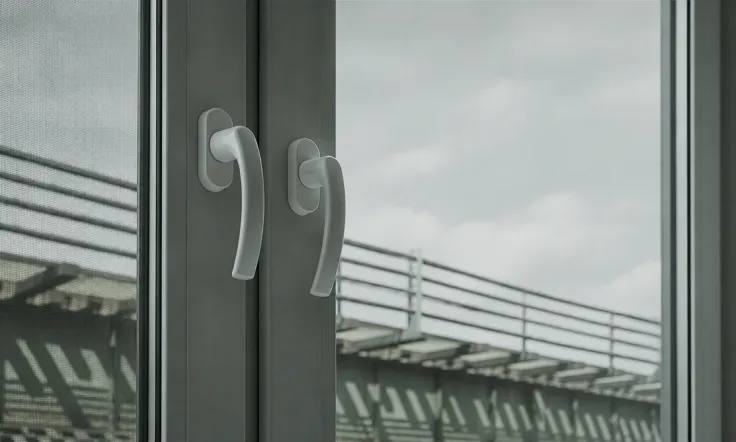
From Digital Design to Factory Precision: How INTUS Uses Technology to Deliver Predictable Outcomes
Performance is easy to promise. Delivering it consistently is harder.
On complex projects, the biggest risks aren’t the big decisions they’re the small inconsistencies that multiply across hundreds of units. A missed revision. A swapped component. An unclear install detail. One “we’ll sort it out in the field” moment that turns into RFIs, delays, rework, and long-term envelope risk.
That’s why, we treat performance as a manufacturing outcome built through repeatable processes, verified checkpoints, and controlled handoffs from design to jobsite. Manufacturing optimization, for us, isn’t about pushing more units faster. It’s about removing uncertainty so performance stays predictable from the factory floor to the finished building.
What “technology in manufacturing” looks like in practice at INTUS
Practical tools that protect consistency:
AI cameras verifying critical assembly steps.
Unit-level QR codes (project + product-specific) to access information, support installation/service, and reduce jobsite guessing.
Packaging and shipping prep designed to help units arrive jobsite-ready.
Why the production process is part of performance
Airtightness, watertightness, thermal efficiency, and durability don’t live only in a spec they live in execution. The same design can perform very differently depending on how consistently it’s manufactured and how well critical details are controlled.
That’s why repeatability matters:
consistent preparation and assembly steps
verified critical hardware/components
documented checks before products move forward
packaging that protects quality through shipping and staging
In other words: the process is part of the product.
Manufacturing decisions are made with the jobsite in mind
Developers and GCs don’t just buy windows, they buy schedule confidence.
That’s why we shift complexity into a controlled factory environment wherever possible. Units are prepared, assembled, and verified under controlled conditions, so installation teams face fewer unknowns in the field.
Optimization here shows up as:
faster sequencing
fewer interruptions for clarification
less corrective work during install
fewer downstream issues during punch and handover
Field performance improves when field ambiguity is reduced.
Smart quality controls: where technology protects consistency
Our AI-powered quality and safety controls support production by verifying critical assembly steps (example: hinge installation).
That kind of verification matters because critical steps are exactly where “small misses” become expensive jobsite problems.
Smart QC is most effective when it’s designed as a system:
standardized checkpoints at key stages (not only at the end)
recorded verification
assistive checks that help flag preventable issues earlier
Technology doesn’t replace craftsmanship. It protects consistency.
Traceability and documentation: reducing jobsite friction (QR codes)
On site, speed comes from access to the right information at the right moment tied to the exact unit being installed.
That’s why we use project- and product-specific QR codes on window units (shared publicly as located on the lower-left corner of the glass) to help teams quickly pull up relevant product information and support resources.
When documentation is easy to retrieve and tied to what’s installed, it helps prevent:
installation errors caused by assumptions
RFIs driven by missing details
delays while teams wait for clarification
callbacks caused by mismatched parts or procedures
For architects and developers, the value is straightforward: less friction during install and a smoother closeout.
Packaging and shipping readiness are part of performance
Even the best-built unit can become a jobsite problem if it arrives damaged or unprotected.
Packaging and loading aren’t “logistics.” They’re part of manufacturing discipline protecting finish quality, glazing integrity, and install sequencing.
What this means for your project
When manufacturing, verification, and documentation work as a connected system, you get outcomes that matter most to architects, developers, and GCs:
Predictable delivery with fewer last-minute surprises
Lower envelope risk
Faster install learning curve with easier access to the right project-specific information
Less rework thanks to earlier detection and more consistent execution
Smoother handover
Want to see how our production + documentation workflow fits your project schedule and reduces install risk?
Book a technical call with our team or join an upcoming Lunch & Learn to walk through how predictable performance is built from design intent to factory precision to jobsite execution.