Top 2026 Trends Reshaping US Commercial Windows Market
Commercial construction in the US is heading into 2026 with cautious growth, big shifts in project types, and a stronger focus on sustainability and data-driven delivery. These same trends are reshaping where, how, and why commercial windows are specified and purchased.
The 2026 Commercial Construction Landscape
In 2026, demand is expected to concentrate in data centers, manufacturing, infrastructure, and adaptive reuse, while traditional office and retail stay flat or grow only in strong regional markets. Government incentives for reshoring manufacturing, semiconductors, EVs, and clean energy are keeping industrial pipelines healthy even as financing remains selective for other sectors.
Owners are pushing for more cost certainty, faster schedules, and more predictable outcomes, which is accelerating the adoption of prefabrication, modular assemblies, and integrated delivery models like progressive design-build and construction manager at risk. To compete, contractors and suppliers need to show how their solutions compress schedules, reduce rework, and de-risk complex projects.
Sustainability And ESG As Baseline
Sustainability has shifted from a differentiator to a minimum expectation in most commercial and institutional projects for 2025–2026. Developers and institutional investors are prioritizing projects that align with ESG criteria, emphasizing lower operational carbon, healthier interiors, and better resiliency to climate risks.
This ESG lens shows up in stricter energy performance targets, more green building certifications, and growing interest in low‑carbon materials and life‑cycle performance data. Building owners increasingly look for products with quantified energy savings, Environmental Product Declarations (EPDs), and strong documentation that supports compliance and reporting.
Adaptive Reuse And Retrofits
High office vacancies and evolving workplace models are driving a wave of adaptive reuse, especially office‑to‑residential, mixed‑use, and lab conversions rather than pure ground‑up commercial office construction. Many cities favor repositioning underperforming buildings over permitting entirely new ones, particularly in dense urban cores.
These conversions require deep envelope upgrades: new layouts, new daylighting patterns, and significantly higher energy performance than the original shells were designed for. That combination makes windows and doors one of the most visible, high‑impact retrofit line items, both in aesthetics (modernizing façades) and in performance (reducing heating and cooling loads).
Technology, Data And Delivery
Across the industry, 2026 will see greater use of AI‑driven planning tools, real‑time field data, and connected equipment to improve scheduling, safety, and productivity. Contractors are relying more on digital collaboration, model‑based coordination, and subscription‑based software ecosystems to manage complex portfolios.
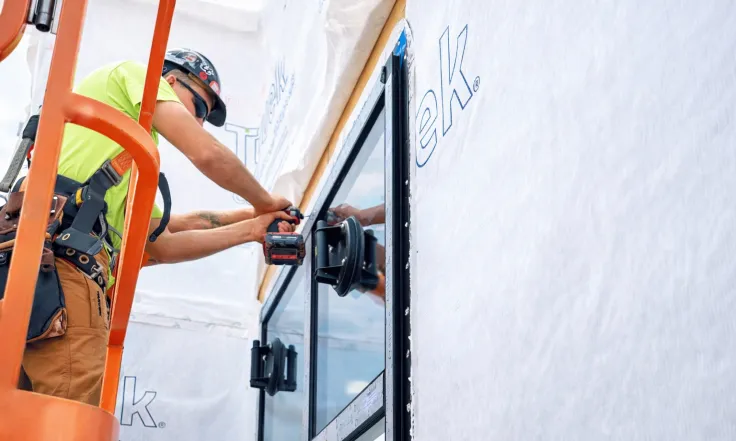
On the hardware side, prefabricated and repeatable assemblies are moving from specialty use to mainstream playbook, particularly on multi‑building campuses and phased projects. For building products manufacturers, this favors systems that are easy to design into BIM workflows, integrate with standard details, and arrive on site as predictable, install‑friendly packages.
Trends Most Impacting Commercial Window Demand
The same macro trends driving B2B construction are directly shaping commercial window demand in 2026. Several stand out as especially important for fenestration:
Growth in data centers, manufacturing facilities, and large infrastructure‑adjacent campuses.
Expansion of adaptive reuse and renovation versus new‑build office.
Escalating sustainability and energy‑code requirements.
Shift toward prefabrication and faster, more integrated delivery.
Each of these creates distinct opportunities for high‑performance commercial windows.
Building Types Driving 2026 Window Demand
Commercial window demand in 2026 is expected to be led by a few key building types and use cases.
Data centers and tech campuses: Record‑breaking growth in data centers, driven by AI and cloud workloads, is generating demand for high‑performance envelopes on support buildings and office components, where thermal control and reliability are critical.
Manufacturing and industrial: New semiconductor, EV, and clean‑energy manufacturing facilities demand durable, thermally efficient glazing for worker spaces, offices, and amenity zones across large campuses.
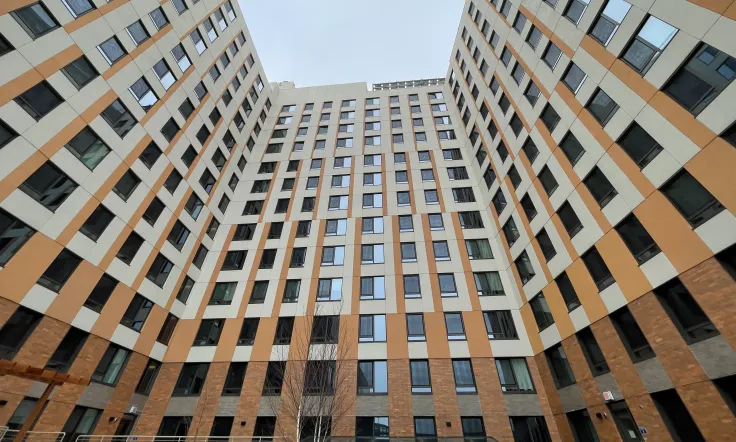
Mixed‑use and multifamily in urban markets: Population growth and zoning changes are supporting multifamily and mixed‑use starts, including podium projects and urban infill, which rely heavily on standardized window packages.
Adaptive reuse (especially office‑to‑residential): Conversions often require full window replacement to meet residential comfort, acoustics, and energy targets, making fenestration a core budget line.
Healthcare, hospitality, and education: These sectors maintain steady pipelines and have strong drivers around comfort, daylighting, and patient/guest experience, favoring higher‑performance glazing over bare‑minimum code windows.
Why Window Specs Are Tightening
Several demand drivers are changing how architects, developers, and GCs think about commercial windows in 2026:
Energy performance and code compliance: More jurisdictions are tightening energy codes and performance standards, pushing projects toward lower U‑values and better solar control to reduce HVAC loads.
ESG and operational carbon: Owners are prioritizing energy savings and carbon reduction over the life of the building, making high‑performance fenestration one of the most cost‑effective envelope upgrades.
Occupant experience and health: Post‑pandemic, there is heightened focus on daylight, views, thermal comfort, and acoustics, particularly in offices, schools, and healthcare.
Lifecycle cost and resilience: Rising energy prices and more extreme weather events increase the value of durable, tight, and well‑insulated window systems that reduce maintenance and improve resilience.
For B2B buyers, this combination makes the “cheapest window that passes code” far less attractive than systems that maximize performance and de‑risk long‑term operating costs.